
Marrakech was the first place I landed in Morocco back in 2018, and I still think it's the best introduction to the country. This guide covers the main Marrakech Morocco tourist attractions worth your time over three days, chaotic as it is. It's a practical list of things to do in Marrakech, not just landmarks to photograph. Three days is enough time to see the big sights, get properly lost in the medina at least once, and still have room to slow down. Here's how I'd spend them if I were doing it again.
Marrakech isn't a quiet secret anymore. According to Morocco's Observatory of Tourism, the city welcomed 4.86 million tourists in 2025 and accounted for nearly 30% of all overnight stays booked in classified accommodation nationwide. That popularity is exactly why having a plan for your three days matters, the main sights get crowded fast, especially if you're visiting during peak season.
Quick answer: is 3 days enough for Marrakech?
Yes, for most travelers. This Marrakech itinerary 3 days breakdown covers the main historical sites, the gardens, the souks, and one proper meal experience without rushing. If you're planning a Sahara trip or a day out to the Atlas Mountains, add a fourth day so it doesn't eat into your city time.
Day 1: The Medina and Jemaa el-Fna
Start in the old city, home to some of the most photographed Marrakech Morocco tourist attractions. Everything here is walkable, which matters because Marrakech's medina is not built for cars or logic.
Jemaa el-Fna is the main square and it's genuinely worth building your day around, twice. In the morning it's calm, mostly juice stalls and the odd snake charmer setting up. By evening it turns into food stalls, storytellers, and a wall of noise. I'd recommend seeing both versions rather than picking one.
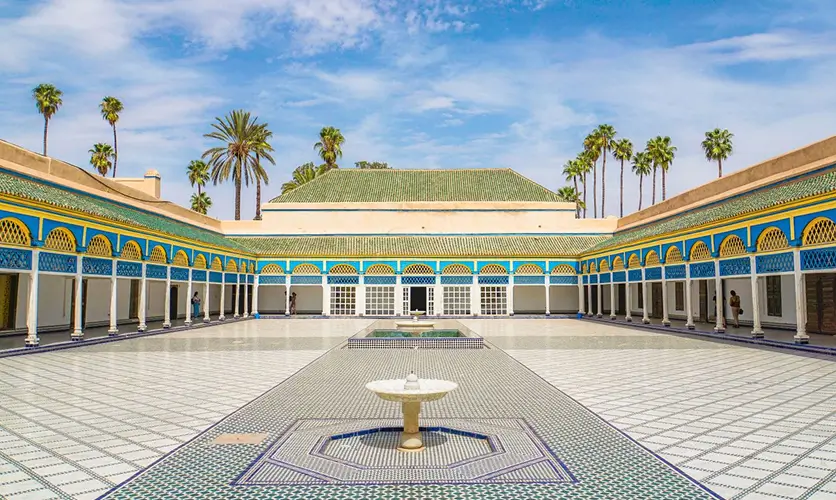
Bahia Palace Marrakech is a short walk from the square and one of the few sights in Marrakech that's genuinely worth the entry fee. The tilework and the courtyards are striking, especially in the main courtyard early in the morning before the tour groups arrive. It's open daily from 8:00 to 17:00, and entry is 70 dirhams (roughly $7). Budget an hour, less if it's busy, which it usually is by late morning.
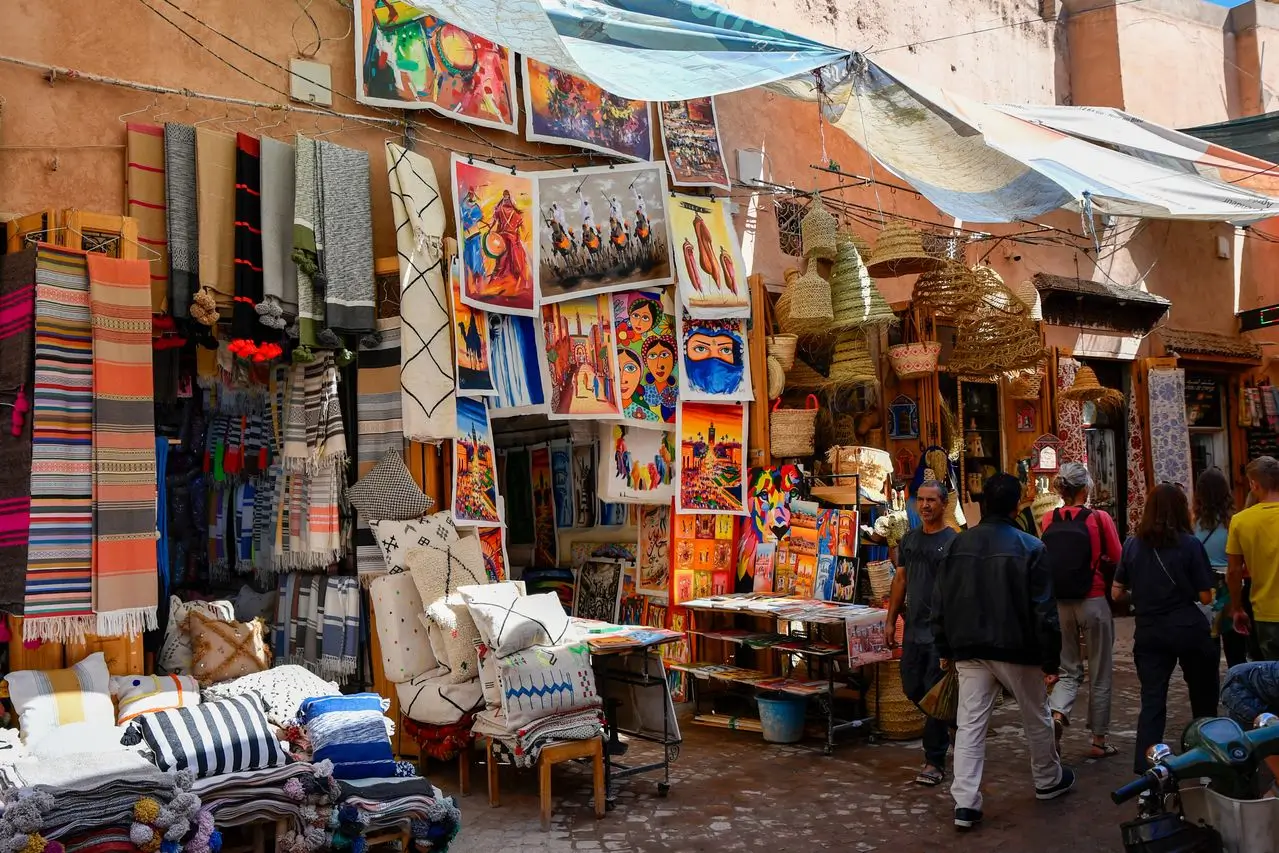
The souks sit just north of the square. Go in without a shopping list. Getting lost is part of the experience, and every wrong turn tends to lead somewhere interesting, a metalwork stall, a dye souk, a tiny mosque. Just keep a mental note of which gate you came in through.
For dinner, eat at the food stalls in Jemaa el-Fna at least once. Prices are higher than a local restaurant would charge, but the experience is worth it for one night. Stalls with the longest queues of Moroccan customers, not tourists, are usually the better bet.
For lunch one day, skip the square and find a small local restaurant instead. On one visit, I stopped at a small local restaurant and ordered a chicken tagine for 40 DH. It came with bread and made for a filling lunch. For me, it was a good example of how you can still eat well in Marrakech without spending a lot.
Day 2: Gardens and Ville Nouvelle
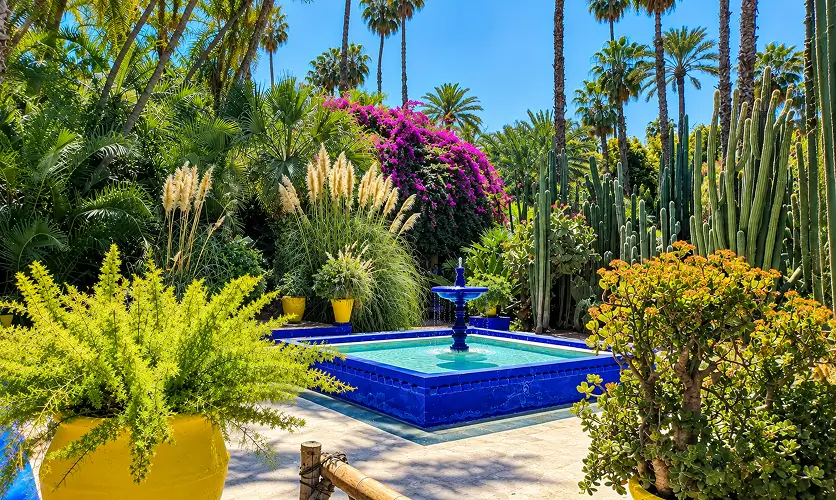
Majorelle Garden was the one place on my first trip that genuinely slowed me down. It's small, but the cobalt blue buildings against the cactus garden are striking in a way that's hard to explain until you're standing in it. It gets busy from mid-morning, so go right when it opens if you can.
From there, it's an easy walk or short taxi into Gueliz, the newer part of the city. This is where I'd go if the medina starts to feel like too much. Wider streets, proper pavements, cafes where you can sit outside without being asked six times if you want a rug.
In the afternoon, consider a hammam. This is a genuine local experience rather than a tourist add-on, though the touristy versions near the main square are a different experience from a neighborhood hammam. If it's your first time, a mid-range hammam with clear pricing upfront is the easier option.
El Badi Palace, now mostly ruins, is worth 30 to 45 minutes if you have time left in the day. Storks nest on the walls, which is a strange and pretty good reason to visit on its own.
Day 3: Slow morning, day trip option, or deeper medina
By day 3, you've usually seen the headline sights, so this is the day to either slow down or go further out.
Option A: Stay in the city. Revisit the souks with more confidence, find a rooftop cafe overlooking the medina, and use the afternoon for something you skipped, the Saadian Tombs or Ben Youssef Madrasa are both solid choices if you have an extra couple of hours.
Option B: Day trip to the Atlas Mountains. If you want mountain air and a break from the city noise, the Atlas foothills are close enough for a half-day trip. I'd only do this if you're not also planning a longer Atlas or Sahara trip later in your itinerary, no point doing it twice.
Either way, save your last evening for the square again. It's genuinely different every time.
Guided tour or go it alone?
You don't need a guide for most of these Marrakech Morocco tourist attractions, the souks and Jemaa el-Fna are meant to be wandered. But a couple of spots are worth booking ahead for.
Bahia Palace and the Saadian Tombs have almost no posted information inside, so a skip-the-line guided tour is genuinely useful here if you want the history explained rather than just the visuals. A half-day combined tour covering Bahia Palace, the Saadian Tombs, and the Koutoubia Mosque is a reasonable way to hit three sights with context in one morning.
The souks are the opposite, a guide can be useful for your first hour if you want help navigating and negotiating, but going back in alone afterward is part of the fun once you've got your bearings.
If you're booking tickets or tours in advance, buy directly from official or well-reviewed operators only, ticket touts near the entrances often charge more for the same access.
Where to stay for easy access to these sights
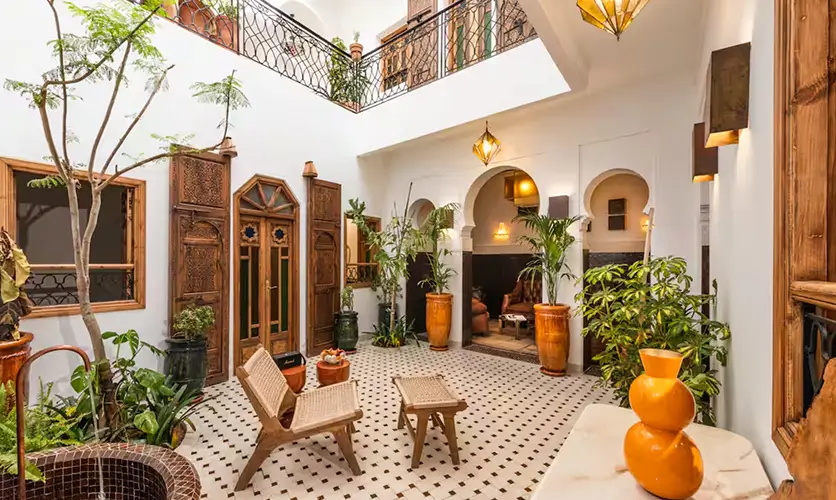
Staying inside or right on the edge of the medina puts you within walking distance of Jemaa el-Fna, Bahia Palace, and the souks, which matters more than it sounds since taxis inside the medina walls are limited. A riad in the Kasbah or Mouassine areas is usually a good balance of quiet at night and a short walk to the main sights.
If you'd rather have wider streets, easier taxi access, and more modern comforts, Gueliz is a solid alternative, you'll just spend a bit more time getting to and from the medina each day.
What Marrakech actually costs
This isn't a full budget breakdown, I've written a separate budget guide for that, but as a rough guide for 3 days:
- Riad or hostel: $15 to $40 a night depending on comfort level
- Food: $10 to $25 a day if you mix street food with the odd sit-down meal
- Attractions (Bahia Palace, Majorelle Garden, etc.): roughly $15 to $20 total for the main sights
- Taxis: cheap, but agree the price before you get in, always
- Airport to medina: petit taxis run on a regulated fixed fare, 100 dirhams (around $10) into the city during the day, rising to 120 dirhams at night (after roughly 8 or 9pm depending on the season). If the driver claims the meter is broken and quotes something different, that fixed rate is your reference point
What I'd skip
Not everything in Marrakech is worth your time. Camel rides on the edge of the city are overpriced and feel more like a photo op than an experience; save that for an actual desert trip if you're heading to Merzouga. Paid photos with performers in the square are also worth avoiding unless you're happy to pay whatever they ask afterward, agree a price first or don't take the photo.
A few things I learned Marrakech travel tips the hard way
Consider this section a quick Marrakech medina guide for staying calm once you're inside. Marrakech's medina has no real logic to its layout, and getting lost is normal, not a sign you're doing something wrong. Google Maps works, but it lags behind the actual alleys, so treat it as a rough guide, not gospel.
Also, if someone offers to "show you the way" to a sight you didn't ask for directions to, it usually ends with an expectation of payment. A polite "la, shukran" (no, thank you) and continuing to walk works better than trying to explain you don't need help. For more on this and other common scams, read is Marrakech safe? My honest guide.
Is Marrakech worth 3 days?
Yes. It's busy, it's a lot to take in, and it's not the most relaxing place in Morocco, but its Marrakech Morocco tourist attractions earn the city's reputation as the country's most iconic destination. Three days gives you enough time to see the essentials and still leave wanting to come back, which is exactly how I felt after my first trip here.
Marrakech Morocco Tourist Attractions FAQs
What are 10 must-see things in Marrakech?
Jemaa el-Fna, Bahia Palace, the medina souks, Majorelle Garden, El Badi Palace, the Saadian Tombs, Ben Youssef Madrasa, Koutoubia Mosque, a hammam, and Gueliz for a break from the medina cover the essentials in 3 days. You won't need more than that for a first visit, better to see these properly than rush through a longer list.
What are the main attractions in Marrakech?
Jemaa el-Fna and the surrounding souks are the heart of the city, with Bahia Palace and Majorelle Garden as the two Marrakech Morocco tourist attractions most worth your time and money. El Badi Palace, the Saadian Tombs, and Koutoubia Mosque round out the main historical sites within walking distance of each other.
What is Marrakech most famous for?
Marrakech is best known for Jemaa el-Fna, its medina and souks, and its riads and gardens, particularly Majorelle Garden. It's also the most visited city in Morocco, which is part of why the main sights get busy and are worth planning around rather than winging.
What are the do's and don'ts of Marrakech?
Do agree taxi and photo prices before paying, dress modestly away from your riad or pool, and carry small dirham notes for tips and minor purchases. Don't accept unsolicited help finding a sight, as it usually comes with an expectation of payment afterward, and don't assume a quoted opening price in the souks is fixed, negotiation is normal.
What should you avoid in Marrakech?
Avoid overpriced camel rides on the edge of the city, paid photos with square performers without agreeing a price first, and treating your phone's map as gospel in the medina, it lags behind the real alleys. Also worth avoiding: exchanging money with street touts instead of a bank or official exchange office.


