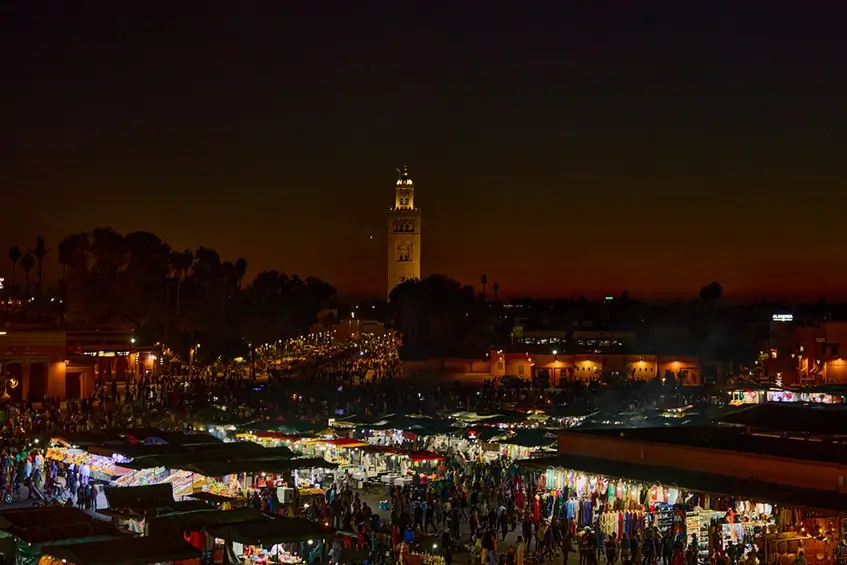
Is Marrakech safe? Yes. For most travelers, Marrakech is a safe city, and violent crime against tourists is rare. The real problems are smaller: pickpockets in crowds, pushy "guides", and taxi drivers who "forget" the meter. Knowing how these work is most of what keeps you safe.
I've been coming back to Morocco almost every year since 2018, and Marrakech is the city I know best. This guide covers what's actually risky, what's just annoying, and the simple habits that make a trip go smoothly. I've also included official advice from the US and UK governments, so you're not relying on my opinion alone.
Quick answer: is Marrakech safe for tourists?
| Question | Short answer |
|---|---|
| Is Marrakech safe overall? | Yes. Most visits have no problems beyond hassle. |
| Biggest real risk | Petty theft (pickpocketing, bag snatching) in crowds |
| Most common annoyance | Fake guides, souk pressure, unmetered taxis |
| Is it safe at night? | The main medina areas and Gueliz are busy and generally safe; quiet back alleys are best avoided late |
| Official US advice | Level 2: Exercise increased caution (September 2026) |
| Emergency numbers | Police 19, ambulance and fire 15 |
Honestly, I’ve never felt unsafe in Marrakech. In my experience, it’s one of the safest cities in Morocco. One night I stayed out in the city until about 1am, and nothing happened.
What official travel advice says about Morocco
The US State Department rates Morocco Level 2: Exercise Increased Caution (updated September 2026). That's the same level the US gives several popular European destinations. The main reason given is the general risk of terrorism, and the advice is to stay alert in tourist areas.
The UK Foreign Office (updated August 2026) says much the same. It highlights petty theft in tourist areas, fake guides in the medinas, and unwanted attention toward women travelers. Both governments say most visits to Morocco are trouble-free.
My honest take: these warnings are worth reading, but they describe risks you'd also face in most big tourist cities. They're not a reason to skip Marrakech.
Common scams in Marrakech (and how to avoid them)
Scams in Marrakech are almost always about money, not danger. Once you recognize them, they're easy to avoid.
- Taxis without the meter. Drivers may quote a fixed "tourist price" instead of using the meter. Ask for the meter ("compteur") before you get in. If they refuse, take the next taxi.
- Fake guides. Someone offers to show you the way, often saying "that street is closed" or "the square is this way". It ends with a request for money. Say "la, shukran" (no, thank you) and keep walking. Official guides carry a badge.
- The tannery trick. A friendly stranger says the tanneries are open "today only" and walks you there. You'll be asked to pay for the visit, then pushed into a leather shop.
- Photos in Jemaa el-Fna. Snake charmers, monkey handlers, and performers expect payment for photos, and the price is often decided after. Agree on a price first, or don't take the photo.
- Henna "gifts". A woman grabs your hand and starts drawing henna, then asks for a large payment. Keep your hands to yourself and say no firmly.
- Souk pricing. The first price is just a starting point. Bargaining is normal. Decide what you'd happily pay before you ask.
The scam I’ve run into most is with taxis. Some drivers asked me for a fixed price instead of using the meter. My advice: always ask the driver to turn on the meter (“compteur”) before the ride starts.
Is Marrakech safe at night?
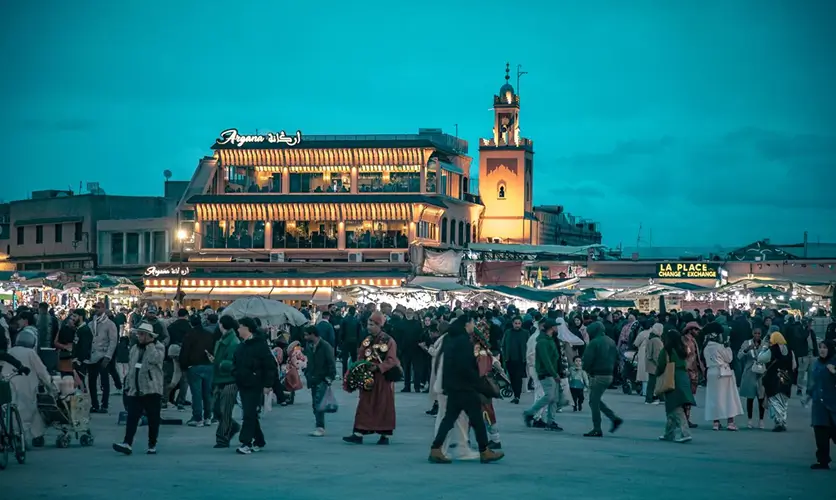
Yes, in the busy areas. Jemaa el-Fna is full of people until late, and Gueliz (the new town) has wide streets, cafés, and restaurants open in the evening. The quieter, darker alleys of the medina are where you're more likely to get lost or be followed by someone offering "help", so stick to main routes after dark.
The bigger issue at night is often transport, not crime. If you go somewhere outside the center, plan how you'll get back before you leave.
There are places outside the center worth visiting, but the problem is getting back. I’d plan to head back before about 10pm, because transport gets harder to find later in the evening.
How to avoid theft in Marrakech
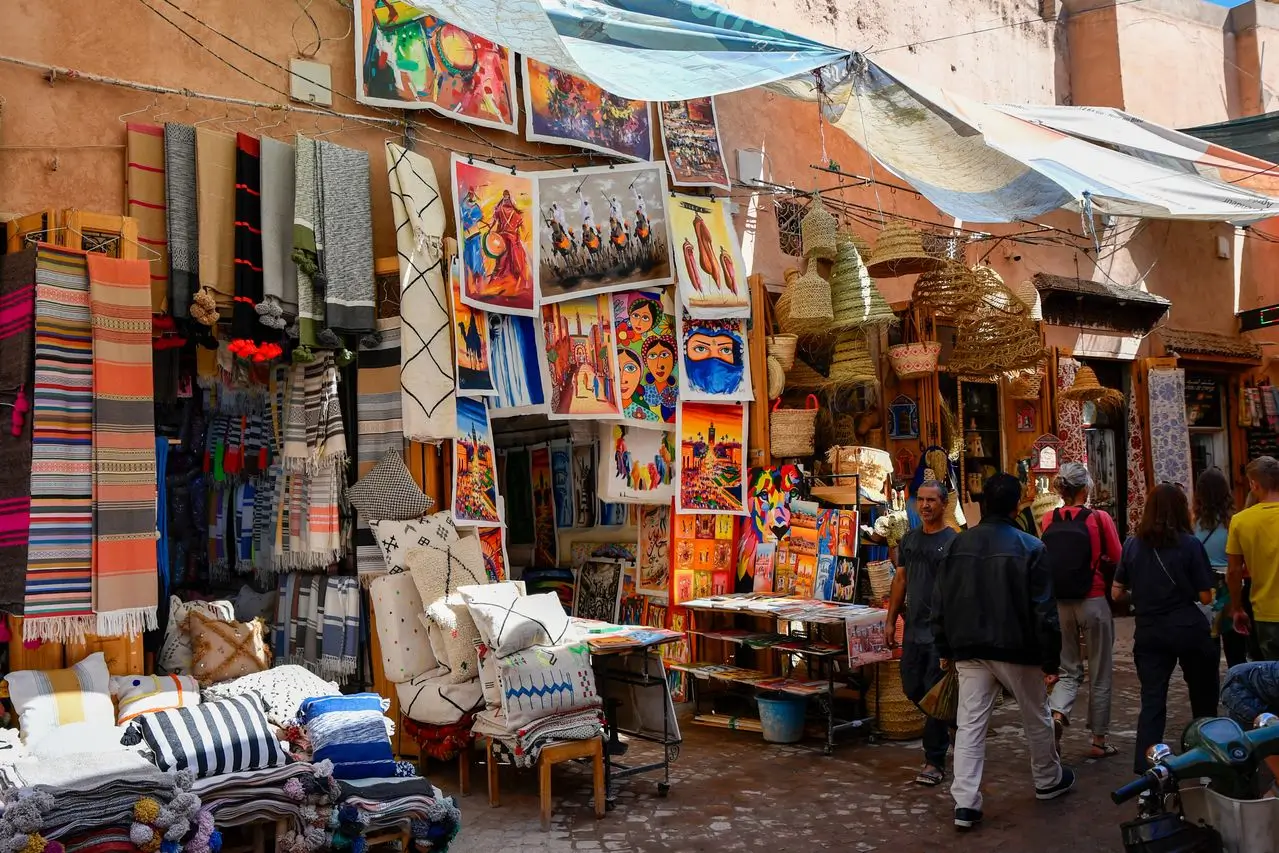
- Use a cross-body bag that zips, worn in front of you in crowded souks and the main square.
- Keep your phone in a front pocket or bag, not in your hand, when walking near the road. The UK Foreign Office warns about drive-by motorbike theft.
- Carry only the cash you need for the day, and leave your passport in your riad or hostel safe.
- Use bank ATMs, ideally inside a bank, and never change money with people on the street.
- Be extra careful in crowds, especially in Jemaa el-Fna in the evening.
Is Marrakech safe for solo female travelers?
I travel as a man, so I can't speak from personal experience here. This section is based on official advice and on what women travelers commonly report.
Many women travel to Marrakech alone and have a great time. The main issue reported is unwanted attention: comments, catcalling, or men trying to start conversations. It's usually verbal rather than physical, but it can be tiring. The UK Foreign Office notes that women, especially when alone, may face this kind of attention.
- Dress modestly outside your accommodation. Loose clothing that covers your shoulders and knees draws less attention.
- Don't feel you need to be polite. Ignoring comments and walking on confidently usually works best.
- Choose accommodation with good reviews from women. Some hostels offer female-only dorms. See our guide to the best hostels in Marrakech.
- Ask your riad or hostel to arrange taxis at night or meet you at a landmark when you arrive.
Emergency numbers and help in Marrakech
| Service | Number |
|---|---|
| Police | 19 |
| Ambulance and fire | 15 |
| Tourist Police (Brigade Touristique) | Office on Jemaa el-Fna, near the post office |
| Your embassy or consulate | Save the number from your embassy's website before you travel |
Save your country's embassy number and your accommodation's phone number before you arrive. Travel insurance is also a good idea, as both the US and UK governments recommend.
My tips for staying safe in Marrakech
- Always ask for the taxi meter, and walk a block away from Jemaa el-Fna before flagging a taxi.
- Plan your trip back if you go outside the center in the evening.
- Save an offline map and your accommodation's location. Getting lost in the medina is normal.
- Say "la, shukran" and keep walking when someone offers unasked-for help.
- Agree on prices first for photos, guides, and anything you buy.
- Trust your instincts. If something feels wrong, walk into a shop, café, or your riad and ask for help.
For a breakdown of what common traps cost you, see Marrakech on a Budget.
Is Marrakech safe FAQs
Is Marrakech safe for tourists?
Yes. Most visits to Marrakech are trouble-free. The main risks are petty theft in crowded areas, fake guides, and taxi drivers who don’t use the meter. Violent crime against tourists is rare.
Is Morocco safe for tourists?
Yes, for most travelers. The US State Department rates Morocco Level 2: Exercise Increased Caution, mainly because of the general risk of terrorism. Petty theft and scams in tourist areas are the most common problems.
Is Marrakech safe at night?
The busy areas are, including Jemaa el-Fna and Gueliz. Avoid quiet, dark alleys in the medina late at night, and plan your transport back if you go outside the center.
What are the most common scams in Marrakech?
Unmetered taxis, fake guides who offer to show you the way, the “tannery is open today only” trick, paid photos with performers in Jemaa el-Fna, and henna sellers who start drawing without asking.
What number do I call in an emergency in Morocco?
Call 19 for the police and 15 for an ambulance or the fire service. In Marrakech, the Tourist Police have an office on Jemaa el-Fna, near the post office.
Conclusion
So, is Marrakech safe? Yes. In my experience, it's one of the safest cities in Morocco for visitors. Serious crime against tourists is rare, and the problems you're most likely to meet are pickpockets, fake guides, and taxi drivers without the meter. Stay alert in crowds, ask for the meter, plan your way back at night, and you'll spend your time enjoying the city instead of worrying about it.
Planning your trip? See our 3-day Marrakech guide, Marrakech on a Budget, and Best Time to Visit Morocco.


